You’ve Got Mail

By Larry Keech, Trefethen Family Descendant

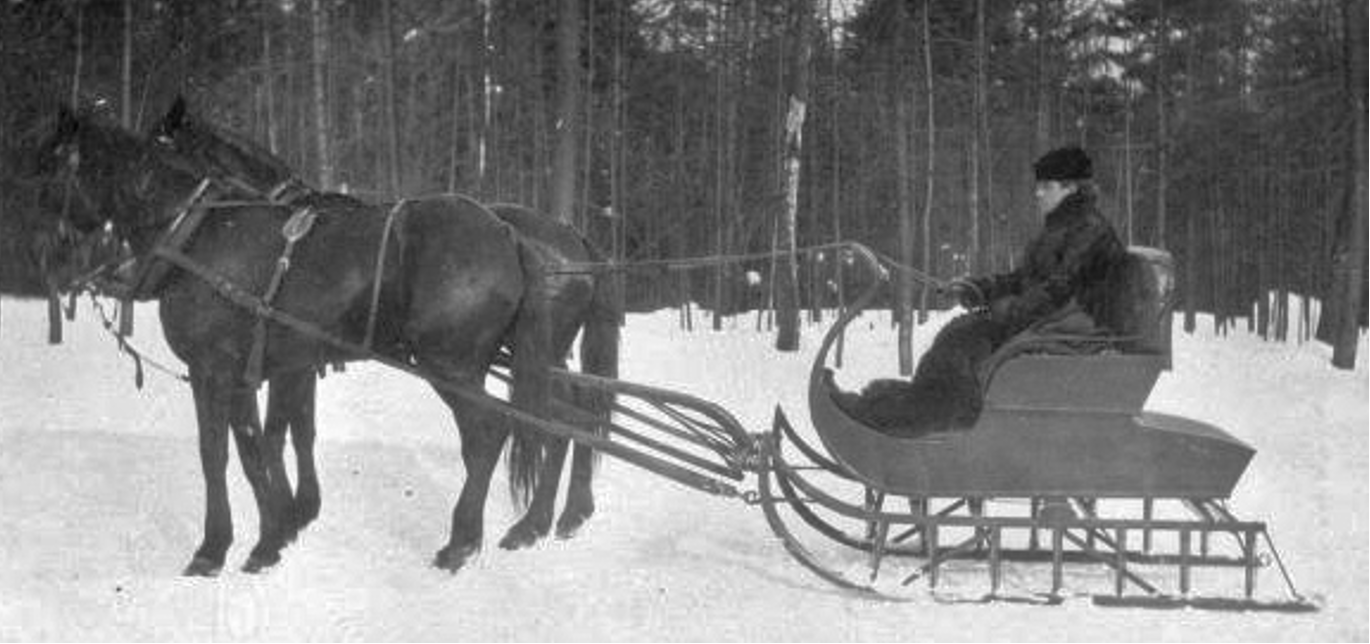
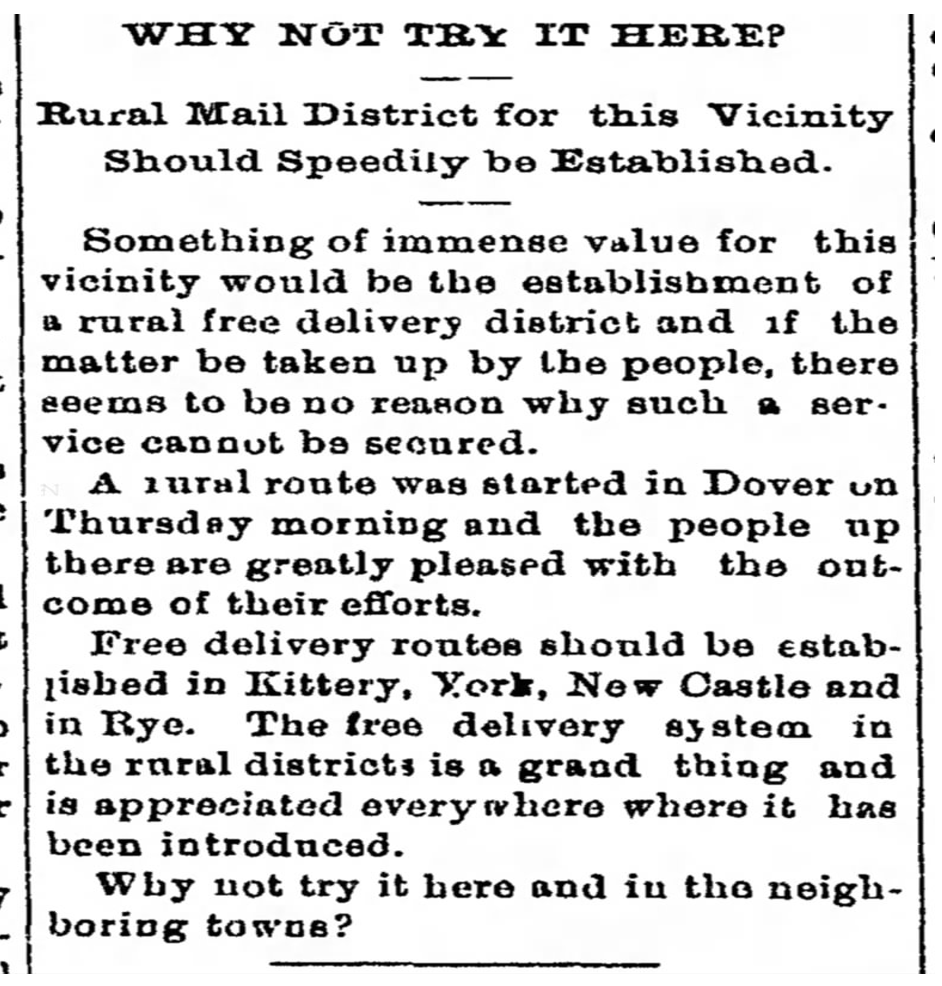
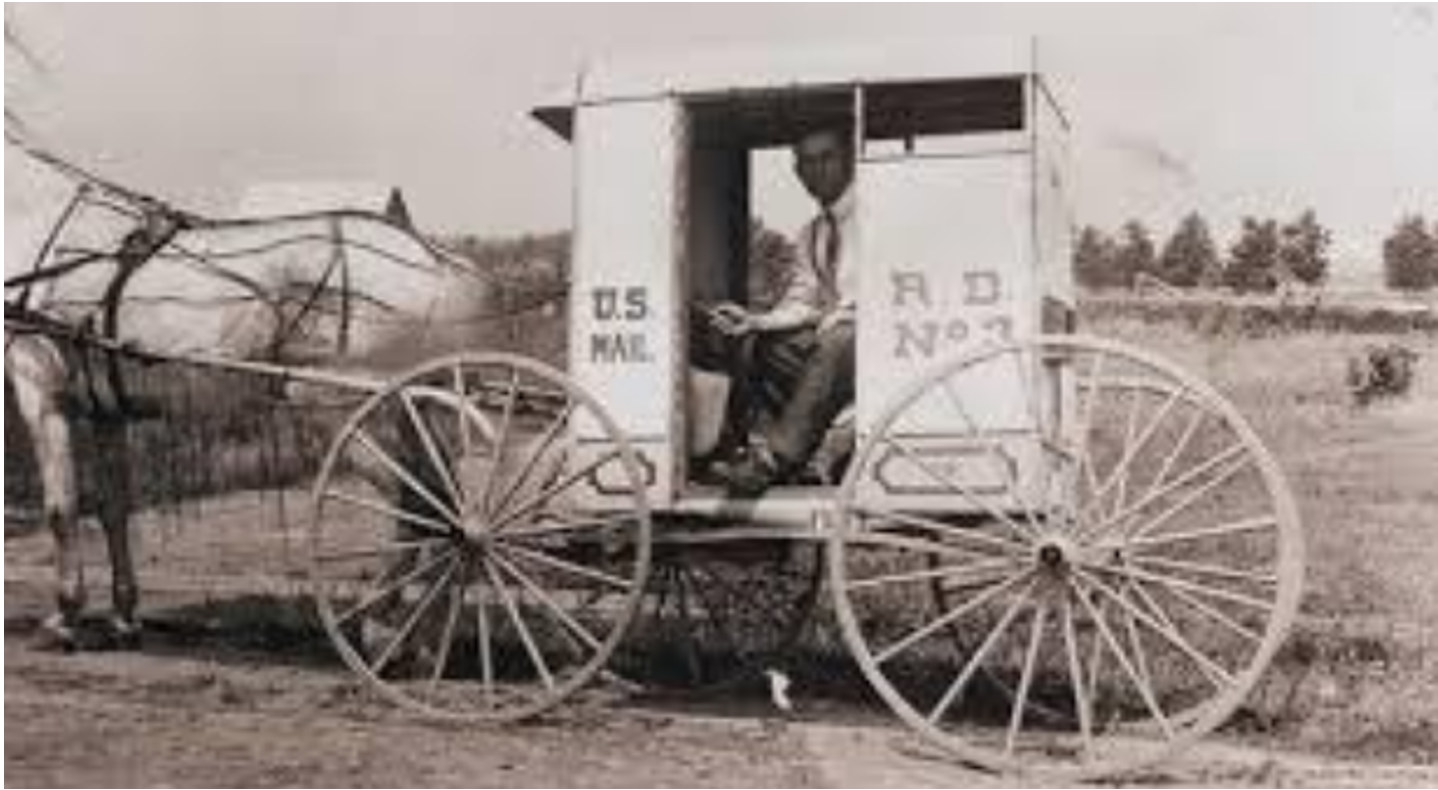
In the late 1890’s the government was trying to establish rural free mail delivery. It was aimed at the farm communities that felt they were isolated out far from the cities. The thought was that rural mail delivery would save time for the farmers who normally would need to travel to the nearest post office to get the updated news and other things. They also thought it would allow mail order catalogs to be delivered and this would help the economy. It was said that road improvements must be made to keep the system running as many became unpassable during this time.

Portsmouth Herald, Nov. 16, 1900                     
In Rye it wasn’t until July 25, 1902 that a town petition was written. In the Supply Foss Trefethen diary, he posts entries that show the beginning.

Jul 25,1902 – Dull and foggy in the morning and cleared off at 2 so that hay makers got a little sun on their hay. Went to town to get the news. Got a petition to have the free mail delivery in town and went round and got about 50 names.

Jul 26,1902 – Dull and some rain in the morning. Went to town and carried the petition to the postmaster Bartlett for use. William C. Walker is put out about the free delivery because it well hurt him as the postmaster.

Apr 1,1903 – Fair and warmer. Edith came. Hauled 2 loads of seaweed etc. Charles E. plowed a patch. We are to have the Free Rural Delivery of mail in May and the driver was here today with a sample of boxes. He wants $2.10 per box.

Apr 25,1903 – Fair. Grafted some. Went to town and got the news and inquired about the Rural Free Delivery. The boxes have not come yet so it will be some days before they are set up for business.

May 1,1903 – Fair and cold with a north wind and freezing in the morning. Chauncey Woodman came and finished my plowing and after noon Billy helped me plant 5 rows of potatoes. Today we had the first Free Rural Delivery of mail after a long wait.
A Trip to Town

by Larry Keech, descendant of the Trefethen Family

This article is inspired by my digitizing and detailed editing of the diaries of Supply Foss Trefethen (1856-1910). He lived in the north part of Rye, was a man of many skills including house building, and was very active in Rye town affairs. He also worked at the Navy Yard in the 1850s and 1860s. An excerpt from his diary of this historical epoch is included in Alex Herlihy’s new history of Rye. The complete diary may be viewed on the web site of the Portsmouth Athenaeum. The early part of the diary is in journal form and is the most detailed record we have of daily life in Rye in the 1800s.

Back in the 1800’s a simple trip to Portsmouth for food and hardware could be quite the ordeal. The winter has reminded people of the inconvenience of snow and ice as well as brutal cold. Many people today don’t realize what that may have meant back in the pre-industrial era. 

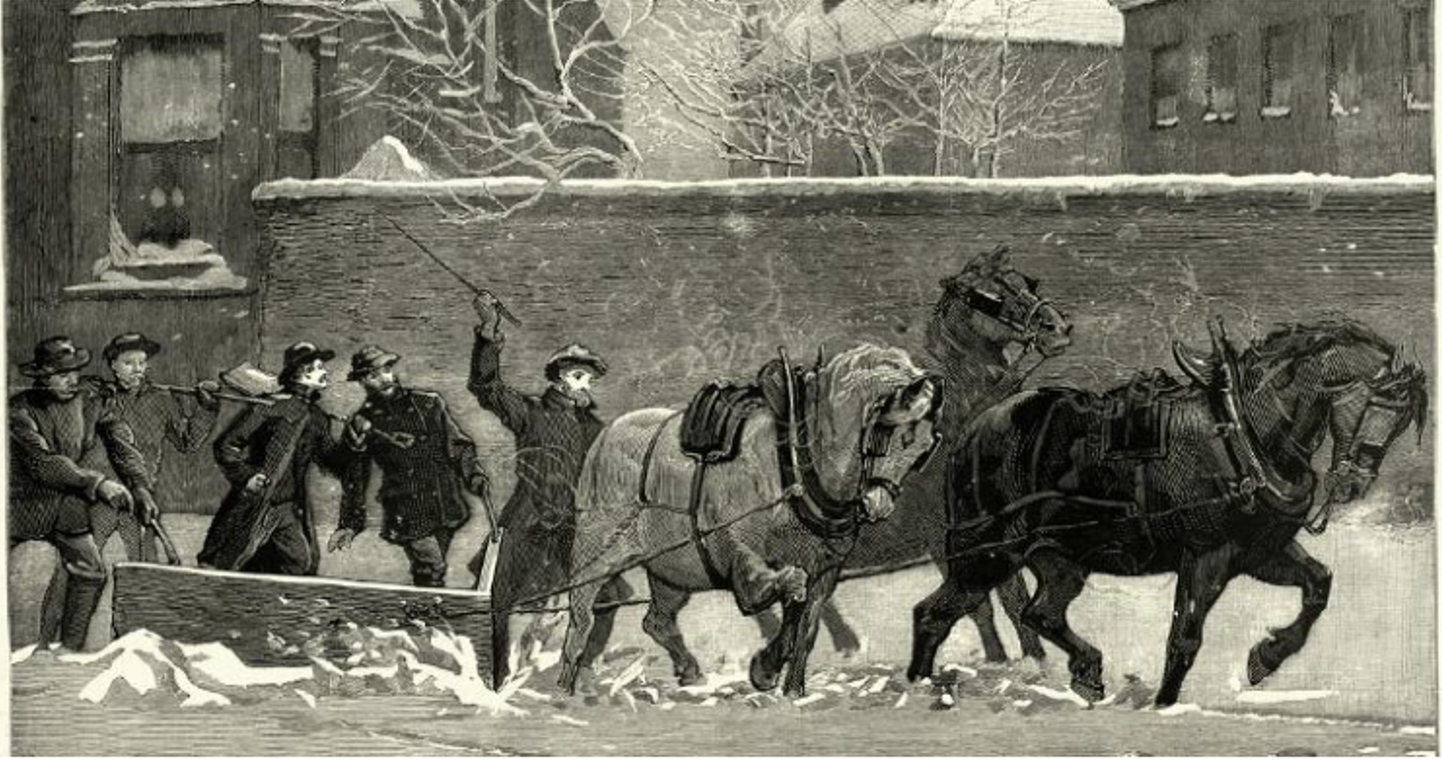
The average Rye Navy Yard worker would get up at around 4:30 in the morning and stoke the fire to warm the house. His wife would also be up at that time preparing an early breakfast, and both would be doing a number of chores prior to the work day. Now, in the winter, if there were heavy snows, no truck plows or salt trucks would be running by to clear your road. It would be done by the locals with oxen dragging a log on an angle much like a road grader. Each area of town had assigned groups for their particular area.

To go to Portsmouth, it was around 3 to 4 miles and they had to pick the best and safest way to travel. If the road was icy, would they risk their horse slipping on the ice and going lame or damaging their wagon wheel from the ruts?  If the snow was just right, they could use a sleigh. Once they left in 15-degree weather the trip to Portsmouth from north Rye could take an hour.

Now in town I doubt you would find great parking and what would you do with your horse? Most likely a livery stable would work, but at extra cost. The guys going to the Navy Yard had an additional trip across the Piscataqua by boat or on foot if the river was frozen. The Yard opened at 7:00 am and they would have to work ten hours to 5:30 pm. This meant that they were traveling home in the dark and cold. When getting home the horse would have to be tended to and additional chores done.

 So, the next time you have bad weather consider that it could be much worse.